

 English
 Español
 عربى
Introduction to PETG Decorative Film In the realm of modern decorative materials, PETG decorative fi...
READ MOREArchitectural Vinyl Wrap: Specifying Films That Hold Up on Real Surfaces
Forty chipped wardrobe doors along a hotel corridor rarely need replacing; they need a new surface. Wrapping them in architectural vinyl wrap typically takes one shift per floor, sends no demolition waste to landfill and costs a fraction of new fronts. It also reads as a genuine refurbishment, provided three things line up: a flat, sound substrate, a film grade matched to the location, and edges that are detailed rather than rushed. Miss any one of them and the same corridor will be back on the snag list within eighteen months.
What follows is a practical view of the material: what it is, where it earns its money, and what to put in the specification so it survives cleaning crews, trolley knocks and a decade of daylight.
What the Material Actually Is
Architectural vinyl wrap is a multi-layer film bonded to an existing surface with a pressure-sensitive adhesive. Interior grades usually run 0.15 to 0.5 mm thick and build up four functional layers: a printed colour layer, an embossed texture carrying the grain or stone pattern, a protective top coat in matte, satin or gloss, and the adhesive itself.
Two constructions dominate. Calendered PVC is the economical option: dimensionally stable, colour-consistent and happiest on flat panels such as cabinet doors and wall linings. Cast PVC and the newer PETG carriers are thinner and far more conformable, so they follow curved reception desks, radiused corners and profiled trims without lifting at the profile.
It is not a vehicle wrap with a different print. Architectural films are generally thicker, formulated for vertical interior exposure and supported by fire test data; look for a classification such as B-s1,d0 to EN 13501-1 or a Class A rating to ASTM E84, and insist the report reference matches the batch you receive.
The Case for Wrapping Over Replacement
The saving is rarely in the film itself. It sits in labour, downtime and waste: no strip-out, no skips, no six-week wait for new doors to arrive from a factory. On an occupied office floor or a trading hotel, that difference is usually what pays for the project.
| Consideration | Replacing panels or doors | Architectural vinyl wrap |
|---|---|---|
| Material cost | New substrate, edging, hardware | Film at a fraction of panel cost |
| Labour | Removal, disposal, refit, making good | Preparation, application, trimming |
| Downtime | Days per floor, often night work | Hours per room, one shift per floor |
| Waste | Old panels to landfill plus packaging | Offcuts only; existing panels stay in service |
| Design change | New panels, new lead time | Re-wrap in a different finish later |
Expect a realistic service life of seven to twelve years on vertical interior surfaces in a normal commercial environment. The upper end is reserved for films with a protective top coat, properly sealed edges, and cleaning regimes that avoid solvents and abrasives.
Substrate Preparation Decides the Outcome
Adhesive will bond to almost anything; it will only stay bonded to a clean, sound, dimensionally stable surface. Most failures traced through warranty claims are preparation failures rather than film failures, so the checklist below is worth treating as the actual scope of work.
- Degrease and rinse first. Silicone polish, kitchen grease and mould release agents cause more blistering than any other single factor, and no primer recovers a contaminated surface.
- Fill and sand. Raw MDF edges, dents and old screw holes must be filled, sanded to roughly 240 grit and dusted off, because every defect telegraphs through a 0.2 mm film.
- Prime porous substrates. Bare MDF, plasterboard and concrete need a sealing primer so the adhesive is not drawn into the pore structure before it can wet out.
- Key glossy laminates and powder coating lightly, then apply the film maker's specified adhesion promoter where required.
- Work inside the temperature window, typically 18 to 25 degrees Celsius at the surface, and allow 24 hours for the adhesive to reach full bond before any cleaning.
Edges, Heat and Honest Limits
Edges fail first. Wrap-arounds need a minimum radius, around 2 mm on most interior films, and internal corners need a relief cut so the film can be folded without tension. After application, edges and recessed details should be post-heated to roughly 60 to 70 degrees Celsius to relax the film and reactivate the adhesive. Leave a 1 to 2 mm expansion gap at door edges so the film is not pinched when the leaf closes against its frame.
Be equally clear about what the material will not do:
- Floors and other horizontal surfaces under foot traffic, where abrasion resistance is not in the same class as a laminate.
- Exterior facades with direct rain and ultraviolet exposure, unless a specific exterior-rated product with a matching warranty is specified.
- Surfaces that run persistently above about 70 degrees Celsius, such as radiator casings and appliance surrounds close to heat sources.
- Zones with aggressive chemical exposure, including laboratory benches and commercial kitchen splash areas that are degreased daily.
Matching the Finish to the Application
Finish selection is where a wrap project is won or lost visually. Order physical samples, view them in the actual lighting of the space, and check grain direction and pattern repeat before committing to a full run.
Wood grain
Use it on joinery, door leaves and reception fronts where the surrounding scheme already contains timber. Insist on a single production lot for a continuous elevation, because two lots of the same reference can differ slightly in tone and depth of print.
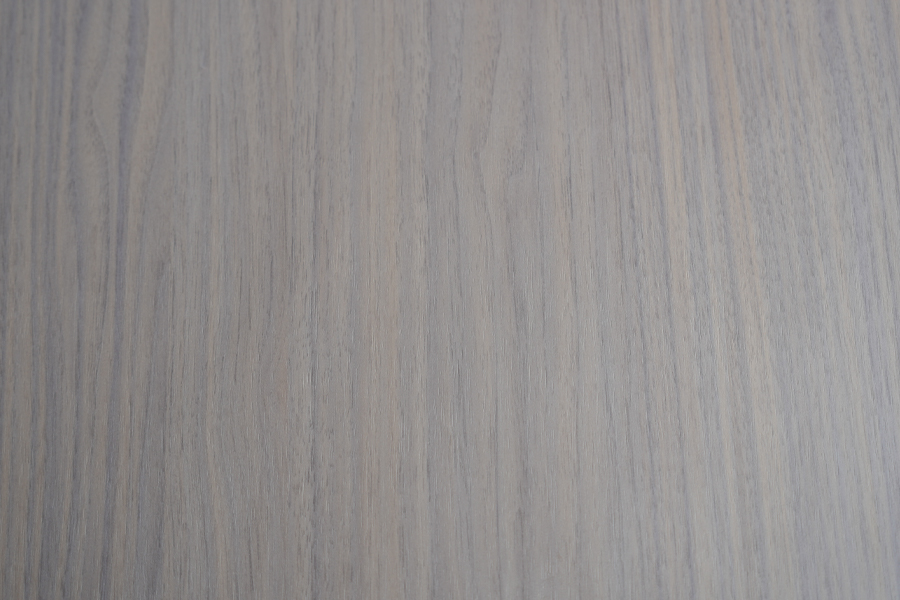 Dark Wood-Grain PVC Decorative Film for Interior SurfacesDark wood-grain PVC film for joinery, door leaves and reception fronts, offering scratch and stain resistance for flat lamination or wrapping.View Product →
Stone and marble
Lift lobbies, washroom vanities and column cladding are the natural territory for marble and terrazzo effects: the visual weight of stone without the load on the structure. Book-matching across panel joints has to be planned at survey stage, not on site.
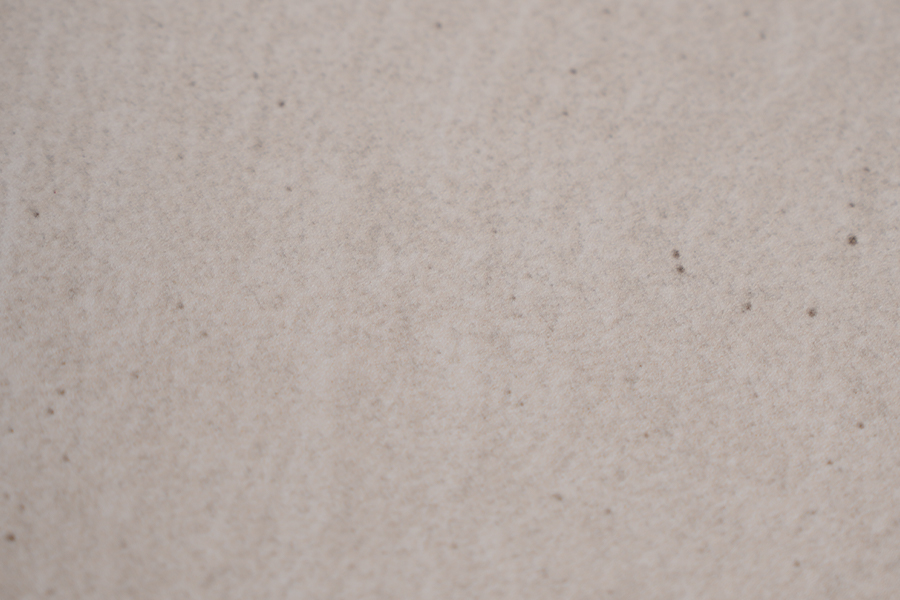 Jazz White Marble-Effect PVC Decorative FilmJazz White marble-effect PVC film for lift lobbies, washroom vanities and column cladding, offering a lightweight stone-look finish for flat lamination and wrapping.View Product →
Solid matte, metal and textile
Solid matte cabinet fronts are the practical answer where colour consistency and fingerprint resistance matter more than pattern, and the wider capabilities of that carrier are set out in this overview of PETG decorative film. Brushed metal effects suit lift doors, kickplates and column trims, while the wear behaviour of metallic surfaces is covered in this analysis of metal brushed decorative film. Fabric and leather textures work well on acoustic panels and banquette fronts, provided the substrate behind them is sealed and flat.
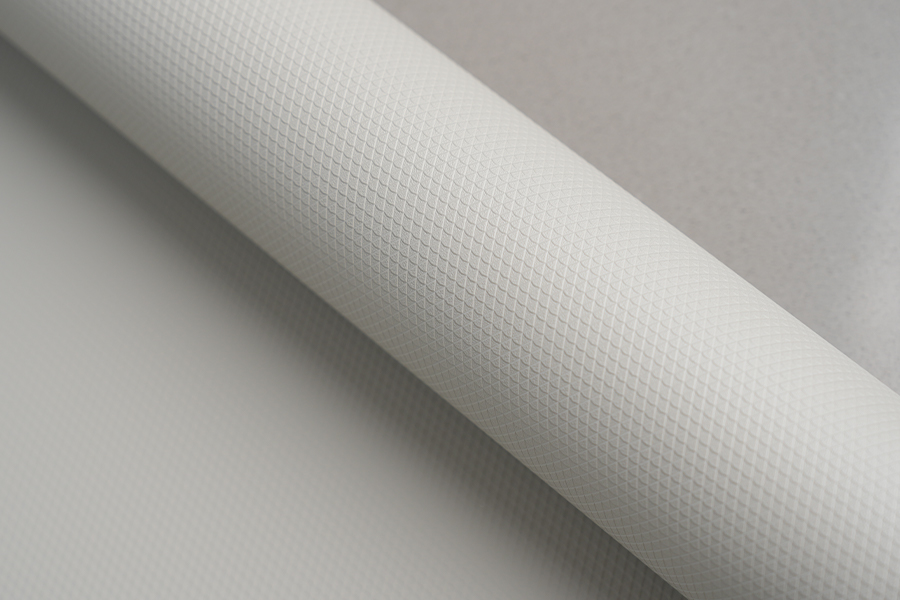 Solid Color Matte PETG Decorative Film for Cabinet DoorsSolid-color matte PETG film for cabinet door panels, suited to flat lamination and wrapping with durable, scratch-resistant performance for residential and commercial interiors.View Product →
What to Put in the Specification
Write the requirement around performance rather than pattern names, and the tender responses become comparable:
- Film construction and thickness in millimetres, plus carrier type: calendered PVC, cast PVC or PETG.
- Adhesive type, and whether a primer or promoter is mandatory for your specific substrate.
- Fire classification with a report reference matching the delivered batch.
- Warranty period and the conditions that void it, typically poor preparation, solvent cleaning or unsealed wet areas.
- Cleaning regime: neutral pH detergent, soft cloth, no abrasives and no solvents.
- Installer evidence: three completed projects on comparable substrates, plus an approved mock-up before the main run starts.
A mock-up on a spare door, kept on site until handover, settles both the colour question and the durability question before anyone commits to 400 square metres of film.
Architectural vinyl wrap is a refurbishment method with a narrow margin for shortcuts. Choose a film matched to the surface and the environment, prepare the substrate as if the whole result depends on it, because it does, and detail the edges properly. Do that, and a tired corridor comes back looking specified rather than patched, at a cost that rarely needs defending.
PREV:No previous articleNEXT:adhesive for pvc to wood: Applications, Selection Criteria, and Practical Guidance
Interested in cooperation or have questions?
Recommended articles
-

Don't hesitate to contact when you need us!
GET IN TOUCH
-
Wood-Grain PVC Printed Decorative Film
Single Color PVC Decorative Film
Time-Space Fantasy PVC Printed Decorative Film
Cloth-Grain PVC Printed Decorative Film
Faux Leather Texture PVC Decorative Film
-
 No. 2 Yidu Road, Yizhuang Village, Guanlin Town, Yixing , Jiangsu, China.
 +86-0510-80773188
+86-18020301786 -

Copyright © Wuxi Telisi New
Material Technology Co., Ltd. Rights Reserved.
PVC Decorative Film Manufacturers PVC Membrane Foil Suppliers
