

 English
 Español
 عربى
عربىIntroduction to PETG Decorative Film In the realm of modern decorative materials, PETG decorative fi...
READ MORELaminating Membrane Guide: How to Choose PVC and PETG Films for Furniture Panels
Picture this: your shop has just taken delivery of a membrane press. The first batch of cabinet doors comes out with film lifting at the routed edges. The second batch shows a pebbly orange-peel surface under certain light. The press parameters, adhesive, and substrate all match what worked last month. The only variable you changed was the film roll.
The laminating membrane you feed into a membrane press is not a commodity. It sets the practical limit on edge wrap, bond strength, surface finish, and environmental performance. Choosing the right film matters as much as choosing the press or the adhesive, and it is usually where furniture makers either gain a smooth lead time or start reworking rejects.
What Is a Laminating Membrane?
A laminating membrane is a flexible decorative foil pressed onto a shaped substrate, typically MDF or particleboard, using heat and vacuum. Unlike flat lamination, which glues a foil onto a flat board, membrane laminating uses a silicone rubber membrane to push the film into routed grooves, chamfers, and radius profiles, so the decorative surface wraps continuously around the part.
Most decorative laminating membranes are built in layers.
- A printed or single-color design layer that carries the visual texture, such as wood grain or stone.
- A polymer carrier, usually PVC or PETG, that provides formability, thickness, and dimensional stability.
- A surface coating that controls gloss, scratch resistance, stain resistance, and heat resistance.
- A backside primer that reacts with the adhesive during pressing.
The practical consequence is simple: the film is not just a color on a roll. It is a precision composite that must work with a specific adhesive system, press cycle, and end-use mechanical load.
How Membrane Laminating Works
Membrane laminating follows the same basic sequence regardless of press brand, but the film and the adhesive have to be matched to each step.
- Adhesive application. A reactive polyurethane (PUR) or hot-melt EVA adhesive is applied to the substrate. PUR adhesives cure by moisture and handle edge stress well.
- Film placement. The laminating membrane is draped over the substrate, printed side up or down depending on the press configuration.
- Vacuum draw. Air is evacuated between the silicone membrane and the film so it pulls tightly around profiles without trapping air.
- Heating. The upper platen heats the film to its forming temperature. PVC softens around 120-140°C; PETG follows a different softening curve.
- Pressing. Pressure is applied through the membrane so the film takes the exact geometry of the panel, including recesses and edges.
- Cooling and trimming. The part is cooled below the film's heat deflection point, removed, and trimmed.
If the film's softening range is too narrow, or if it thins unevenly across a radius, you will see bridging, thin corners, or stress whitening at fold lines. That is why consistent gauge and reliable heat formability are production decisions, not cosmetic ones.
Types of Laminating Membrane Film
Four polymer families dominate decorative membrane pressing for furniture. Each changes the cost, process window, and end-user properties of the panel.
| Film type | Typical thickness | Edge wrap | Odor / eco profile | Typical use |
|---|---|---|---|---|
| PVC | 0.12-0.80 mm | Excellent | Moderate; low-odor grades available | Wardrobes, cabinet doors, office furniture |
| PETG | 0.15-0.60 mm | Good | Low odor; suitable for sensitive indoor spaces | Kitchen cabinets, children's furniture |
| PP | 0.15-0.50 mm | Fair | Recyclable; narrower process window | Selected furniture and interior parts |
| Acrylic (PMMA) | 0.20-0.70 mm | Fair to good | Good; higher heat resistance | Fronts near heat sources, commercial interiors |
PVC remains the most common laminating membrane because it offers the best balance of formability, embossing depth, dimensional stability, and cost. PETG has gained ground in kitchens and bedrooms because it delivers the same decorative range with lower residual odor and better resistance to environmental stress cracking. The right choice depends on the pressing temperature your adhesive tolerates, the geometry of the part, and the regulatory or indoor-air targets you need to meet.
What to Check Before Buying a Laminating Membrane
Buying decorative film is not the same as purchasing a pigment or an adhesive. You are purchasing a process guarantee. Unless the film has reliable gauge control and repeatable formability, the press operator has no stable reference point.
- Thickness tolerance. A consistent thickness across roll width and batch prevents thin edges and uneven gloss. Ask for the nominal gauge and the tolerance band.
- Surface performance. Scratch resistance, stain resistance, and heat resistance are set by the top coating. A nano-coating can mean the difference between a door that lasts and one that dulls quickly.
- Adhesive compatibility. Some films work better with PUR, others with EVA. Test the film with your actual adhesive line and press cycle.
- Low odor and emissions. For living spaces, request films produced with water-based inks and low-odor formulations.
- Heat formability. Confirm the softening window and behavior on reverse radii and deep grooves before committing a batch.
A supplier with in-house coating, printing, and quality control will usually test these properties for you. At our facility, we run water-based printing, positioning lamination, and nano-coating on the same production floor, so we can share batch-level test data rather than generic spec sheets.
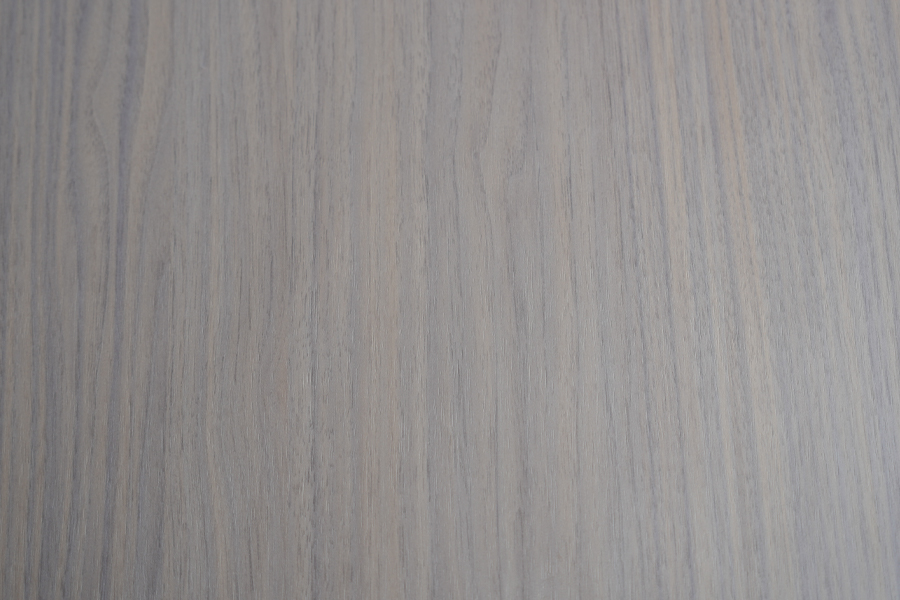 Dark-Colored Wood-Grain PVC Printed Decorative FilmThis film is a practical option when you need a wood-grain finish with scratch and stain resistance. It suits flat lamination, wrapping, or vacuum forming, making it worth checking for projects that require durable, low-odor surfaces.View Product →
Matching the Film to the Application
There is no single best laminating membrane; there is only the best film for a given panel geometry, environment, and budget. Here are three common scenarios.
Cabinet and Wardrobe Doors with Deep Profiles
Doors with routed shaker profiles need a film that can stretch over sharp edges without thinning. A thick PVC film with a good embossed wood grain is usually the safest option. It wraps edges cleanly and hides slight substrate irregularities.
High-Moisture Areas and Bar Fronts
Kitchens and washroom vanities see steam, cleaning chemicals, and thermal cycling. A PVC film with a robust surface coating, or a PETG film with low moisture uptake, resists edge lifting better than an economy-grade film. Stone and marble looks are popular here because they mask joint lines on routed edges.
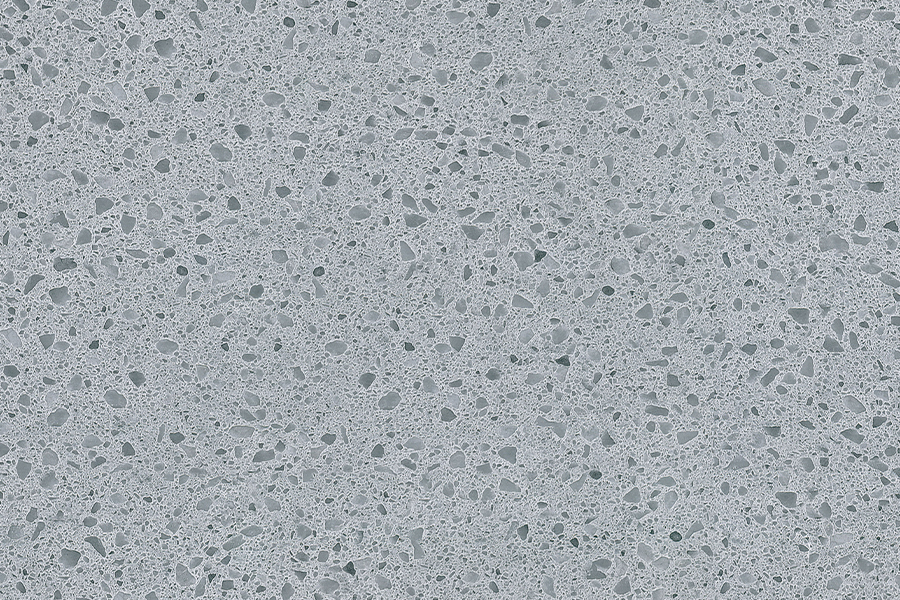 Terrazzo Marble PVC Printing Decorative FilmWith its water-based, low-odor printing and easy-to-clean surface, this film fits well in moist environments like kitchens and washrooms. It offers a stone-like look that helps hide joint lines on routed edges, so it's relevant for cabinet and vanity applications.View Product →
Metal-Look Accents and Commercial Fit-Outs
Reception desks, display counters, and retail panels often use brushed-metal films. These require excellent print definition and a scratch-resistant top coat, because defects are immediately visible on a metallic finish.
Why the Film Manufacturer's Process Matters
The same polymer can produce very different films depending on how it is compounded, cast or calendered, printed, and coated. A manufacturer with integrated production lines can control variables that separate a good film from a problem film.
Water-based printing, for example, keeps volatile organic compound levels low, which directly affects the odor profile. Positioning lamination keeps the printed pattern in register when the film stretches during pressing, so a wood grain does not distort around a corner. Nano-coating adds a thin inorganic layer that improves scratch resistance and stain release without changing flexibility.
These are not marketing terms. They are process choices with measurable effects on the press line. When a supplier operates its own PETG decorative film production under ISO 9001 and ISO 14001, you get a documented trail of how the film was made and what it can do.
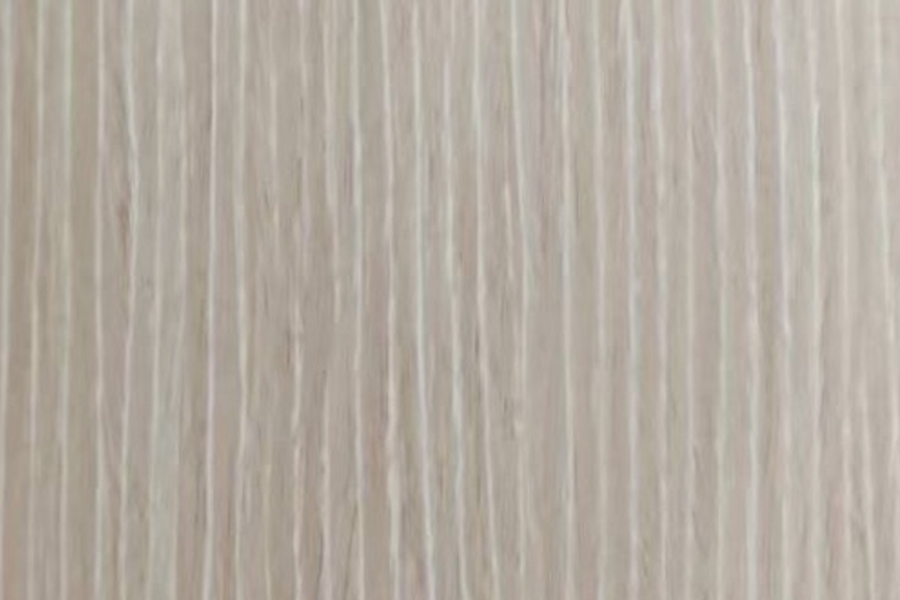 Wood-Grain Printed PETG Decorative FilmThis PETG film offers food-grade safety and good flexibility for both flat lamination and 3D wrapping. It is a sensible pick for spaces where hygiene matters, and its documented manufacturing trail may help when evaluating a new supplier.View Product →
Sourcing Advice and Quality-Control Checks
When you evaluate a new laminating membrane supplier, run small-scale trials before you change your purchase order. The following checks will save you from large scrap rates.
- Request a 10-meter sample from the same batch you intend to purchase, not a laboratory sample from a different line.
- Press the sample on your actual substrate with your actual adhesive and press cycle. Film behavior changes with substrate roughness and adhesive open time.
- Measure thickness at five points across the roll width. A variance above 5% is a warning sign for uneven surface appearance.
- Check the film's resistance to chemicals used in the final environment, such as acetone-based cleaners for kitchens.
- Review VOC and odor test results if your customer specifies indoor-air limits.
A reliable supplier will give you batch certificates, explain the process window, and adjust the film build-up if your panels have unusually deep profiles. That is the working relationship you need when a laminating membrane is the single variable between a clean run and a week of rework. Our factory in Yixing is set up to support exactly that kind of collaboration, from prototype samples to full container shipments.
Final Takeaway
Laminating membrane selection is a technical decision that drives bond integrity, surface durability, and indoor environmental performance. Match the film type to the panel geometry and adhesive system, verify thickness and coating performance with batch samples, and choose a manufacturer whose integrated process can document what it produces. Do that, and the membrane press becomes a reliable tool for making clean, durable, good-looking panels.
PREV:No previous articleNEXT:How to Get Vinyl to Stick to Wood: Surface Prep, Adhesives & Film Options
Interested in cooperation or have questions?
Recommended articles
-

Don't hesitate to contact when you need us!
GET IN TOUCH
-
Wood-Grain PVC Printed Decorative Film
Single Color PVC Decorative Film
Time-Space Fantasy PVC Printed Decorative Film
Cloth-Grain PVC Printed Decorative Film
Faux Leather Texture PVC Decorative Film
-
 No. 2 Yidu Road, Yizhuang Village, Guanlin Town, Yixing , Jiangsu, China.
 +86-0510-80773188
+86-18020301786 -

Copyright © Wuxi Telisi New
Material Technology Co., Ltd. Rights Reserved.
PVC Decorative Film Manufacturers PVC Membrane Foil Suppliers
