

 English
 Español
 عربى
عربىIntroduction to PETG Decorative Film In the realm of modern decorative materials, PETG decorative fi...
READ MOREPET vs PVC Films: Key Differences, Environmental Impact and How to Choose
A cabinet shop evaluating decorative films often asks the same question: is PET film better than PVC film? For flat panels and environmental compliance, PET is the stronger choice. For wrapped edges, deep profiles, and tighter budgets, PVC still performs well. The practical answer depends on the geometry of the part, the equipment you already run, and the end-use certification you need.
What Are PET and PVC Films?
PET (polyethylene terephthalate) is a polyester with a stiff molecular structure. In film form, it offers clarity, tensile strength, dimensional stability, and high heat resistance. These properties make PET suitable for flat lamination on cabinet doors and flat-pack panels. PET also has a smoother, harder surface, which helps resist scratches and makes cleaning easier.
PVC (polyvinyl chloride) is a vinyl polymer. Unmodified PVC is rigid, but the material used for decorative films normally contains plasticizers that make it soft, flexible, and easy to form. That flexibility is the main reason PVC has dominated edge wrapping and profile lamination. It bends around tight radii without the micro-cracks that can appear in stiffer films. PVC also processes at lower temperatures, which means lower energy use on conventional wrapping lines.
PETG (glycol-modified PET) is a close relative of PET. It retains the chlorine-free, low-odor character of PET but has better thermoforming behavior. Many cabinet shops treat PETG as the middle option between PET and PVC.
PET vs PVC: Key Differences at a Glance
| Property | PET film | PVC film |
|---|---|---|
| Base polymer | Polyester | Polyvinyl chloride |
| Flexibility | Rigid, limited deep draw | Flexible, excellent formability |
| Edge wrapping | Best for flat or slightly curved surfaces | Wraps tight radii and profiled edges |
| Heat tolerance | Higher softening range | Lower softening point |
| Surface hardness | Good scratch resistance | Good but can be softer when plasticized |
| Recycling | Established PET recycling streams | Limited recycling; chlorine content |
| Typical cost | Higher | Lower |
| Common uses | Flat panels, PETG cabinet doors, automotive film | Profile wrapping, furniture edges, decorative surfaces |
Formability: Why PVC Still Leads on Complex Shapes
The first question when selecting a decorative film is usually how the part will be wrapped. On a flat door panel or a simple flat edge, almost any film with sufficient adhesive can work. The problems begin when the film must follow a routed groove, a rounded corner, or a deep draw.
PVC's plasticized structure absorbs the bending stress and conforms to the substrate instead of pushing back. This allows a wrapping line to operate at higher speed and with lower scrap. PET, by contrast, is dimensionally stable and tends to return to its original flat shape after being stretched. A PET film can be made to wrap simple curves, but the process window is narrower and the risk of bridging or tenting over concave details is higher.
That is why many manufacturers keep PVC in production for door frames, drawer fronts, and decorative moldings. For example, a light-colored woodgrain PVC printed decorative film can reproduce a realistic wood appearance on profiles where a rigid PET film would leave micro-gaps or poor adhesion.
 Wholesale Light-Colored Wood-Grain PVC Printed Decorative Film Suppliers, CompanTelisi is China Wholesale Light-Colored Wood-Grain PVC Printed Decorative Film Suppliers and Company,Transform your space with our light-...View Product →
This does not mean PVC is the automatic winner. On a perfectly flat panel, PET's rigidity is an advantage: the film lies down without waviness and forms a hard, uniform surface. Designers who want a very flat, crisp look often prefer PET or PETG over a soft PVC film.
Surface Performance and Long-Term Durability
Surface hardness affects how the finished piece behaves during assembly, transport, and daily use. A film with higher hardness resists fingernail scratches and light abrasion. PET generally provides the harder surface, so PET-wrapped panels tend to stay cleaner and less marked in high-traffic kitchens. PVC with a high plasticizer content feels softer and can mark more easily, although the effect depends on the specific formulation.
Chemical resistance is another point to check. Acetic acid, citrus cleaners, and alcohol can attack some plasticizers, causing whitening or softening on PVC. PET and PETG are more resistant to many common household cleaning agents, which is why PETG is frequently chosen for cabinet interiors and door surfaces near cooking areas.
PVC still has a place in lower-wear applications such as decorative trim, wall panels, and furniture backs, where the cost saving is more important than maximum scratch resistance. PVC can also be formulated with harder topcoats or protective nano-coatings. When comparing suppliers, ask for the actual surface hardness, cleanability test results, and the plasticizer content of the film.
Environmental Profile and Low-Odor Requirements
Environmental specifications are no longer a side consideration. Building and furniture projects increasingly request low-VOC, low-odor materials, recycling credentials, and chlorine-free compositions. PET performs better in these areas than PVC because it does not contain chlorine and can enter established PET recycling streams. When PVC burns under uncontrolled conditions, it can release hydrogen chloride, which complicates waste handling and fire safety.
Odor is an important factor for indoor furniture. Some PVC films have a noticeable smell during the first weeks after production, especially when the substrate is wrapped soon after lamination. PET and PETG are generally lower in odor. In a closed kitchen, that difference can be decisive. A solid-color matte cabinet door panel PETG decorative film is often specified when the client wants a smooth, low-odor surface on flat or gently shaped doors.
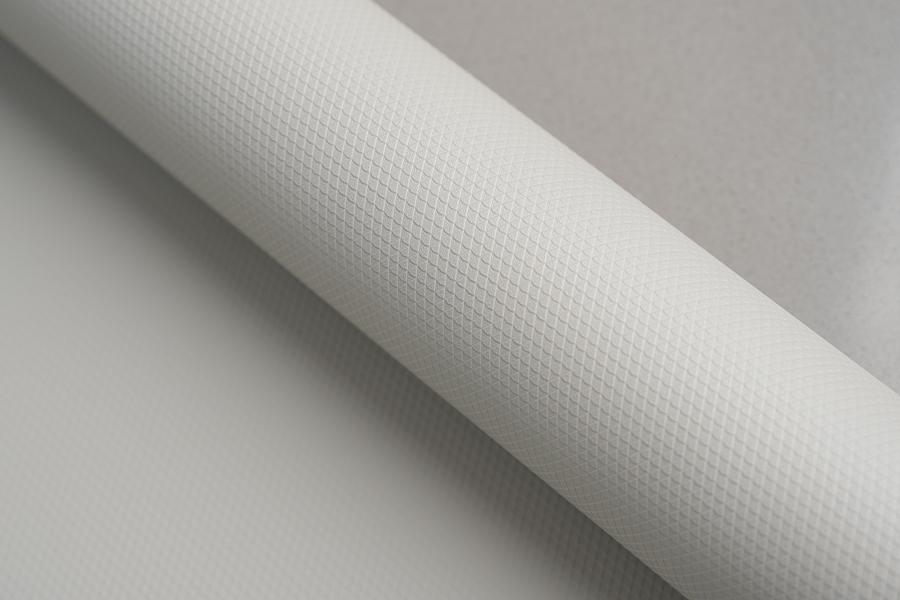 Wholesale Solid Color Matte Cabinet Door Panel PETG Decorative Film Suppliers, CTelisi is China Wholesale Solid Color Matte Cabinet Door Panel PETG Decorative Film Suppliers and Company,Solid Color Matte PETG Decorati...View Product →
Sustainability also depends on the inks and adhesives used. Water-based printing and low-VOC finishes reduce emissions during production and installation. The same base polymer can perform very differently depending on the coating system, so it is worth asking the film supplier for VOC test data and material safety documentation.
Processing, Equipment and Adoption Cost
Your existing lamination or wrapping line may determine which film is practical. PVC processes at lower temperatures and has a wider temperature window, which makes it forgiving for job-shop work and for operators who switch between many film colors. PET requires more precise heating and pressure, especially for 3D lamination, because it is stiffer. PETG sits between the two: it can be thermoformed with less energy than PET and still gives good thickness distribution in corners.
Adopting a new film is not just a matter of replacing the roll on the machine. Adhesive selection, heating temperature, roller pressure, and edge-trim settings all have to be re-optimized. A change from PVC to PET or PETG can reduce scrap if the line is set up correctly, but it may also require new tools or test cycles. For an established cabinet line, a pilot trial is the only reliable way to measure production yield.
Suppliers are expanding PETG options beyond plain colors. If you need a wood look with PETG's cleaner profile, a woodgrain-printed PETG decorative film can match many wood species while keeping the material family consistent for recycling. PETG is also available in matte and textured surfaces, which helps hide minor substrate imperfections.
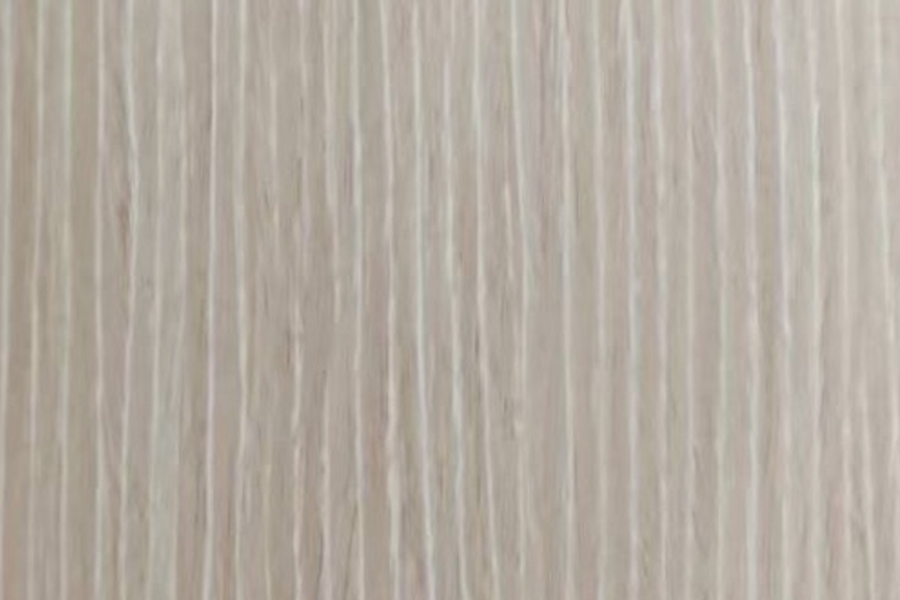 Wholesale Wood-Grain Printed PETG Decorative Film Suppliers, Company - Wuxi TeliTelisi is China Wholesale Wood-Grain Printed PETG Decorative Film Suppliers and Company,Bring the timeless beauty of wood to your project...View Product →
How to Choose Between PET and PVC Films
Use a simple evaluation process rather than relying on assumptions.
- Check the geometry: tight radii and complex profiles point to PVC or PETG; flat panels favor PET.
- Check the environmental requirement: recycled content, chlorine-free, and low-odor specifications favor PET or PETG.
- Check the equipment: older wrapping lines with lower temperature capacity are usually more comfortable with PVC.
- Check the end use: kitchen cabinets and office furniture often require low odor, while decorative trim may not.
- Check the total system cost, including waste, scrap rate, and line speed, not just the film price per linear meter.
To see the practical range of materials available, browse the decorative film product range and compare PETG, PVC, and PET options side by side. For a deeper look at PETG's benefits, read this overview of the advantages and diverse applications of PETG decorative film.
The choice between PET and PVC is not about which plastic is universally better. It is about matching film properties to part geometry, processing capability, and environmental goals. PET is the better environmental choice and gives a hard, stable surface; PVC is still the most forgiving option for complex wrapping; PETG offers a middle path. Order samples from your supplier, run them on your own equipment, and make the decision based on measured results rather than marketing claims.
PREV:Covering Furniture with Vinyl: How to Choose, Prepare, and Apply It ProperlyNEXT:Interior Film Explained: Types, Applications and Selection Tips for Durable Surfaces
Interested in cooperation or have questions?
Recommended articles
-

Don't hesitate to contact when you need us!
GET IN TOUCH
-
Wood-Grain PVC Printed Decorative Film
Single Color PVC Decorative Film
Time-Space Fantasy PVC Printed Decorative Film
Cloth-Grain PVC Printed Decorative Film
Faux Leather Texture PVC Decorative Film
-
 No. 2 Yidu Road, Yizhuang Village, Guanlin Town, Yixing , Jiangsu, China.
 +86-0510-80773188
+86-18020301786 -

Copyright © Wuxi Telisi New
Material Technology Co., Ltd. Rights Reserved.
PVC Decorative Film Manufacturers PVC Membrane Foil Suppliers
