

 English
 Español
 عربى
عربىIntroduction to PETG Decorative Film In the realm of modern decorative materials, PETG decorative fi...
READ MOREStone Grain PVC Decorative Film: Uses, Specs & Buying Guide
Stone Grain PVC Printed Decorative Film Delivers Realistic Stone Aesthetics at a Fraction of the Weight and Cost of Natural Stone
Stone grain PVC printed decorative film is a multi-layer polyvinyl chloride film with a photorealistic stone pattern printed onto its surface, used to wrap, laminate, or clad furniture panels, cabinetry, wall boards, flooring, and architectural profiles with the visual appearance of natural stone — marble, granite, travertine, slate, and concrete among the most popular designs. It replicates the colour, veining, texture, and depth of natural stone at approximately 5–15% of the installed cost, with none of the weight, fragility, or installation complexity that real stone demands.
For interior designers, furniture manufacturers, renovation contractors, and fit-out specifiers, stone grain PVC decorative film resolves one of the longest-standing trade-offs in interior design: how to achieve a premium stone aesthetic on substrates, surfaces, and budgets that cannot accommodate the structural and financial demands of natural stone. The film is applied to MDF, particleboard, plywood, PVC profiles, aluminium, and existing surfaces — making it one of the most flexible surface finishing materials available across both new build and refurbishment contexts.
How Stone Grain PVC Decorative Film Is Manufactured
Understanding the manufacturing process explains why high-quality stone grain PVC films look convincingly realistic and why the quality gap between premium and budget films is so significant.
PVC Base Film Production
The foundation of any decorative PVC film is the base layer — a calendered or cast PVC sheet. Calendered PVC is produced by passing molten PVC compound through a series of heated rollers under pressure, producing films typically 0.10–0.50 mm thick at high speed and relatively low cost. Cast PVC is poured as a liquid and cured on a release substrate — a slower, more expensive process that produces a more dimensionally stable film with better elongation, preferred for applications requiring complex forming or wrapping around tight radii. For most stone grain decorative film applications, calendered PVC between 0.18 mm and 0.35 mm thickness is the industry standard.
The PVC compound includes plasticisers (to control flexibility), stabilisers (to prevent heat and UV degradation during processing and use), pigments (for base colour), and processing aids. The plasticiser type and loading level are critical to the film's long-term performance — low-quality plasticisers migrate to the surface over time, causing the film to become sticky, discoloured, or dimensionally unstable.
Gravure Printing of the Stone Pattern
The stone grain design is applied using rotogravure printing — the same high-resolution intaglio process used in banknote and packaging printing. Engraved copper cylinders transfer ink from engraved cells onto the PVC film surface at speeds exceeding 150–200 metres per minute, with up to 8–12 colour stations to reproduce the tonal depth and colour variation of natural stone accurately. The finest stone grain PVC films are developed from high-resolution photographic scans of actual stone slabs — capturing veining, mineral inclusions, surface variation, and colour gradients that simpler digital prints cannot replicate.
Print repeat length — the distance before the stone pattern begins to repeat along the film roll — is a key quality indicator. Premium stone grain films use repeat lengths of 1,200–3,000 mm, dramatically reducing the visible repetition that betrays a printed film in large-format applications. Budget films with 600 mm or shorter repeats show obvious pattern tiling in floor, wall, or furniture applications wider than one metre.
Surface Coating and Texture Application
After printing, the film receives a topcoat — typically a polyurethane (PU) or acrylic UV-cured lacquer — that determines the surface finish (gloss, satin, matt, or ultra-matt), scratch resistance, chemical resistance, and cleanability. High-performance PU topcoats with hardness ratings of H to 2H on the pencil hardness scale protect the printed design from abrasion and cleaning agents. Some premium stone grain films receive an embossed texture registered to align with the printed stone design — replicating the open-pore surface of marble, the rough grain of slate, or the granular texture of granite with a tactile quality that adds significant realism.
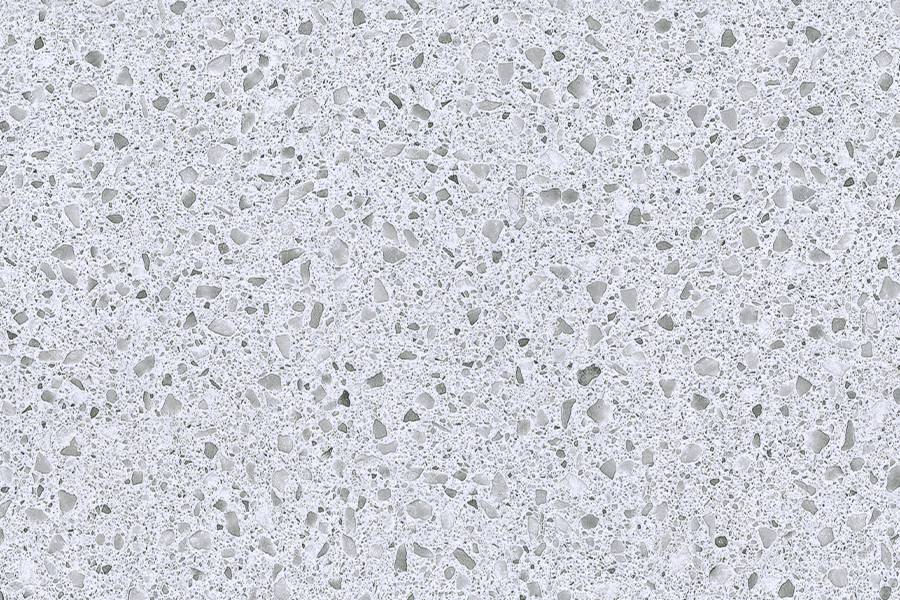
Stone Varieties Most Commonly Replicated in PVC Decorative Film
The commercial library of stone grain PVC decorative film designs is extensive, with manufacturers updating their pattern collections annually to reflect interior design trends. The most consistently in-demand stone designs include:
- Carrara White Marble: The most globally recognised and commercially demanded stone pattern. White or light grey base with soft grey veining. Used extensively in kitchen and bathroom cabinetry, countertop wrapping, and luxury furniture. Associated with contemporary, minimalist, and Mediterranean interior styles.
- Calacatta Marble: Similar in base tone to Carrara but with bolder, more dramatic veining in grey, gold, or warm beige. Higher-contrast design that reads as more premium. Popular for feature panels, headboards, and statement furniture pieces.
- Nero Marquina (Black Marble): Deep black base with white veining. High contrast and visually striking. Used in contemporary and luxury interiors for kitchen islands, bathroom vanities, and accent panels.
- Travertine: Warm beige or ivory with characteristic void and pore structure. Associated with Mediterranean and classical interior design. Popular in wall cladding, flooring, and bathroom applications.
- Grey Slate: Layered, directional grain in cool greys and blue-greys. Frequently used in bathroom panels, feature walls, and commercial fit-outs seeking an industrial or raw material aesthetic.
- Granite (various): Speckled multi-colour designs in black/grey, beige/cream, or brown/gold. Used in kitchen surfaces, reception counters, and commercial furniture. The granular dot pattern is visually distinct from marble veining and reads as more grounded and utilitarian.
- Concrete / Industrial Stone: Smooth, uniform grey with subtle tonal variation and minimal pattern. Drives demand in Scandinavian-influenced, industrial, and contemporary commercial interiors. Often paired with wood grain films on furniture pieces for material contrast.
- Onyx: Translucent-looking designs with dramatic flowing veining in white, honey, or green tones. The most theatrical and luxury-oriented stone pattern, used for feature wall panels, bar fronts, and high-end residential feature furniture.
Key Technical Specifications of Stone Grain PVC Decorative Film
Selecting the correct film specification for an application requires evaluating several technical parameters. Using an under-specified film in a demanding application — such as a high-gloss marble film in a kitchen environment — is one of the most common causes of early film failure and client dissatisfaction.
| Parameter | Standard Grade | Premium Grade | Why It Matters |
|---|---|---|---|
| Total Thickness | 0.10–0.18 mm | 0.20–0.50 mm | Thicker films wrap better, resist puncture, and feel more substantial |
| Topcoat Hardness | HB–H (pencil scale) | H–2H | Determines scratch and abrasion resistance in daily use |
| UV Resistance | 3–4 (Blue Wool Scale) | 5–7 | Prevents colour yellowing and fading in light-exposed locations |
| Print Repeat Length | 600–900 mm | 1,200–3,000 mm | Longer repeat = less visible pattern tiling in large applications |
| Elongation at Break | 80–120% | 150–250% | Higher elongation allows wrapping of curved or profiled substrates |
| Temperature Resistance | Up to 60°C | Up to 80–90°C | Critical for kitchen environments and surfaces near heat sources |
| Chemical Resistance | Mild detergents only | Household cleaners, diluted acids | Determines suitability for kitchen, bathroom, and commercial use |
| Roll Width | 1,260 mm | 1,260–1,400 mm | Wider rolls reduce seam frequency in large panel applications |
Applications: Where Stone Grain PVC Decorative Film Is Used
Stone grain PVC decorative film is used across a remarkably wide range of applications in both residential and commercial contexts, driven by its combination of visual realism, workability, and cost-effectiveness.
Kitchen Cabinetry and Furniture Wrapping
Kitchen cabinet fronts, drawer panels, and island panels wrapped in marble or concrete grain PVC film are among the highest-volume applications for this product. The film is vacuum-pressed or membrane-pressed onto MDF door fronts under heat, conforming to routed profiles, bevels, and three-dimensional shapes. A complete set of kitchen cabinet doors wrapped in high-quality marble grain PVC film costs approximately 15–25% of equivalent solid stone or stone veneer cabinet fronts, with no structural reinforcement requirements for the cabinet carcass. The result is visually indistinguishable from real stone at normal viewing distances when premium-grade film is used.
Wall Cladding Panels and Feature Walls
Stone grain PVC film laminated to MDF, plywood, or PVC foam board creates lightweight wall cladding panels that can be installed by standard joinery contractors without specialist stone-fixing expertise. A full-height wall clad in stone grain panels weighs a fraction of ceramic tile or natural stone — a 9 mm MDF panel faced with PVC film weighs approximately 6–8 kg/m², compared to 20–35 kg/m² for ceramic tile. This makes stone grain PVC wall panels suitable for buildings and floors that cannot support heavy stone cladding, and significantly reduces installation time and labour cost.
Bathroom Vanities and Wet Area Panels
Bathroom applications require stone grain PVC films with superior moisture resistance, chemical resistance (to soap, shampoo, and cleaning products), and edge sealing to prevent water ingress at panel joins. PVC foam board rather than MDF is the preferred substrate in wet areas — PVC is inherently waterproof, where MDF will swell and delaminate if water reaches exposed edges. Marble grain designs are particularly prevalent in bathroom vanity units, bath panels, and shower enclosure surrounds — areas where the stone aesthetic is most expected but the installation of real stone most impractical.
PVC Profile Wrapping for Doors and Architraves
Stone grain PVC decorative film is used extensively in profile wrapping — the process of continuously laminating film around extruded PVC or MDF door frame profiles, skirting boards, architraves, and window surrounds. A foiling machine feeds the film and substrate together, applying heat-activated adhesive to bond the film to the profile's full surface including its shaped edges and recesses. This process runs at speeds of 15–30 metres per minute, making it highly productive for large-volume joinery component production. Concrete grey and travertine stone grain profiles are popular in contemporary fitted furniture systems.
Commercial Interiors: Retail, Hospitality, and Office
In commercial fit-out environments — hotel lobbies, restaurant interiors, retail shop fronts, and office reception areas — stone grain PVC film enables the high-end stone aesthetic demanded by brands and operators at project budgets that would not accommodate genuine stone. The film also offers a practical advantage in commercial contexts: damaged panels can be replaced individually at low cost, whereas damaged natural stone cladding requires specialist sourcing and installation that may be impossible to match precisely after years of weathering and patination in the original stone.
Flooring and Countertop Film
Thicker, more abrasion-resistant stone grain PVC films are used as the decorative layer in luxury vinyl tile (LVT) and SPC (stone plastic composite) flooring construction — where the film is laminated beneath a wear layer rated to AC3 or higher abrasion resistance. In countertop applications, stone grain PVC film is applied to MDF or particleboard substrate with postforming at edges, offering a cost-effective worktop solution for bedroom furniture, office desking, and light-duty kitchen applications where heavy stone countertops are not structurally feasible.
Stone Grain PVC Film vs Natural Stone vs Other Stone-Effect Alternatives
Stone grain PVC decorative film competes with several alternative products in the stone-effect surface category. Understanding where each excels helps specifiers and manufacturers make the most cost-effective and performance-appropriate material choice.
| Material | Visual Realism | Cost (Relative) | Weight (kg/m²) | Durability | Substrate Flexibility |
|---|---|---|---|---|---|
| Stone Grain PVC Film | High (premium grade) | Very Low | <1 (film only) | Medium (surface abrasion) | Very High |
| Natural Stone Slab | Maximum | Very High | 20–80 | Very High | Low (flat surfaces only) |
| Stone-Effect Ceramic Tile | High | Medium | 18–25 | Very High | Low (flat, rigid surfaces) |
| Stone-Look HPL Laminate | High | Medium | 8–25 (panel) | High | Medium (flat to slight curve) |
| Stone Grain Wallpaper | Medium | Low | <0.5 | Low | Medium |
| Engineered Stone (Quartz) | Very High | High | 30–50 | Very High | Low (countertops only) |
Stone grain PVC film's critical advantage is its substrate flexibility — it is the only stone-effect material that can wrap curved surfaces, three-dimensional profiles, and complex shapes, making it the only option for furniture, profiled mouldings, and shaped architectural elements where flat stone-effect materials simply cannot be applied.
Application Methods for Stone Grain PVC Decorative Film
The application method determines the final quality of the laminated surface. Different methods suit different substrates, production volumes, and surface geometries.
Vacuum Membrane Pressing (for Flat and 3D Profiles)
Membrane pressing is the dominant industrial method for applying stone grain PVC film to MDF cabinet doors, drawer fronts, and furniture panels with routed or moulded profiles. The substrate is coated with heat-activated adhesive, the film is laid over it, and a vacuum pulls a flexible silicone membrane down over the assembly — pressing the film into every recess and around every profile at temperatures of 90–130°C. The result is a seamless, bubble-free surface where the film conforms precisely to the three-dimensional profile beneath it. Cycle times of 3–5 minutes per press load make this viable for both batch and continuous production.
Flat Lamination (for Smooth Panel Surfaces)
For flat panel applications — wall boards, countertop substrates, and flat cabinet components — stone grain PVC film is applied using flat-bed lamination with a pressure roller and heat-activated or solvent-based adhesive. Continuous roll-to-panel laminators process panels at speeds of 15–25 metres per minute, making this one of the highest-productivity surface finishing processes in furniture and panel manufacturing. The film is bonded permanently to the panel surface and trimmed at the edges.
Hand Application for Small Areas and Renovation
Self-adhesive stone grain PVC films — with a pressure-sensitive adhesive backing protected by a release liner — allow hand application for renovation, DIY, and small-area commercial applications. Air-release (micro-perforated) adhesive systems allow the film to be repositioned and smoothed without bubbles, significantly reducing installation skill requirements. Surface preparation remains critical: the substrate must be clean, dry, grease-free, and smooth, as any surface irregularities telegraph through the thin PVC film and are visible in the finished surface.
Profile Wrapping for Continuous Linear Elements
As described in the applications section, profile wrapping machines continuously feed stone grain PVC film around extruded profiles using heated rollers and adhesive activation. The key technical requirement is that the film must have sufficient elongation (typically 150% or more) to stretch around the radii of the profile without tearing, whitening at bends, or losing adhesion at corners. Film selection for profile wrapping must specifically account for the tightest radius present in the profile geometry.
Quality Indicators That Separate Premium from Budget Stone Grain PVC Films
The price range for stone grain PVC decorative film is wide — from commodity budget films at less than $1 per square metre to premium architectural-grade films at $8–$15 per square metre. The differences are real and consequential for the finished product quality and service life.
- Number of print colours: Budget stone films use 4–6 colour gravure stations. Premium films use 8–12 stations, reproducing the subtle tonal variation, translucency effects, and mineral depth of real stone that fewer colours cannot capture.
- Registered emboss alignment: Premium stone grain films have surface textures that are registered — aligned — with the printed pattern beneath. A marble vein in the print is accompanied by a raised or recessed texture line running along exactly the same path. Budget films use generic emboss patterns applied without registration to the print, which creates a disconnect between visual and tactile information that reduces realism.
- Plasticiser quality: Premium films use non-migrating phthalate-free plasticisers (DINP, DOTP, or citrate-based) that comply with REACH regulations and do not migrate to the film surface over time. Budget films may use lower-cost plasticisers that cause surface stickiness, adhesive transfer, and yellowing within 2–5 years.
- Formaldehyde-free adhesive systems: Some entry-level stone grain PVC films use solvent-based or formaldehyde-containing adhesive backing systems. Premium films use waterborne or hot-melt adhesives with E1 or E0 formaldehyde emission compliance, required for residential and children's environments in EU markets.
- Dimensional stability: Premium films maintain consistent roll width and thickness across the full roll length, with width variation of less than ±1 mm. Budget films may vary by 3–5 mm, causing misalignment in registered applications and rejection rates in automated lamination processes.
- Third-party certification: Reputable stone grain PVC film suppliers provide test certificates for key parameters: REACH compliance, EN 71 toy safety (where relevant), flame retardancy (BS 476, DIN 4102, or ASTM E84 for commercial applications), and Oeko-Tex Standard 100 for skin-contact applications.
Maintenance and Long-Term Care of Stone Grain PVC Film Surfaces
Stone grain PVC film surfaces are significantly lower maintenance than natural stone, which requires periodic sealing and is vulnerable to staining from acidic substances. However, PVC film surfaces have their own maintenance requirements and limitations that should be communicated to end users and specifiers.
- Daily cleaning: Wipe with a soft damp cloth or mild detergent solution. Avoid abrasive cleaners, scouring pads, or cleaning agents containing bleach above 5% concentration — these will dull the topcoat and potentially discolour the printed design.
- Heat protection: Do not place hot items (pots, hair straighteners, heated styling tools) directly on PVC film surfaces. PVC begins to soften and deform at temperatures above 60–80°C depending on grade. Always use heat-resistant trivets or mats on surfaces near heat sources.
- Sharp object protection: While premium stone grain films have H-grade or harder topcoats, they will be scratched by sharp metal objects dragged across the surface. Use cutting boards rather than cutting directly on film-faced surfaces, and fit felt pads to the bases of decorative items placed on film-faced furniture.
- Edge sealing: If the film edge is exposed — at panel edges not covered by edge banding — apply a compatible PVC edge sealant or silicone sealant in wet areas to prevent moisture ingress beneath the film. Delamination almost always begins at unprotected edges where water can penetrate.
- UV exposure: Even premium stone grain PVC films with Blue Wool Scale 5–7 UV resistance will show gradual colour shift over years of direct sunlight exposure. In conservatories, south-facing rooms, or commercial interiors with large skylights, consider UV-filtering window film or specify the highest UV-resistance grade available.
PREV:Cloth-Grain PVC Printed Decorative Film: Uses, Benefits & Buying GuideNEXT:Cloth Grain PVC Printed Decorative Film: Uses & Buying Guide
Interested in cooperation or have questions?
Recommended articles
-

Don't hesitate to contact when you need us!
GET IN TOUCH
-
Wood-Grain PVC Printed Decorative Film
Single Color PVC Decorative Film
Time-Space Fantasy PVC Printed Decorative Film
Cloth-Grain PVC Printed Decorative Film
Faux Leather Texture PVC Decorative Film
-
 No. 2 Yidu Road, Yizhuang Village, Guanlin Town, Yixing , Jiangsu, China.
 +86-0510-80773188
+86-18020301786 -

Copyright © Wuxi Telisi New
Material Technology Co., Ltd. Rights Reserved.
PVC Decorative Film Manufacturers PVC Membrane Foil Suppliers
